Understanding Suprematism: Malevich’s Radical Vision
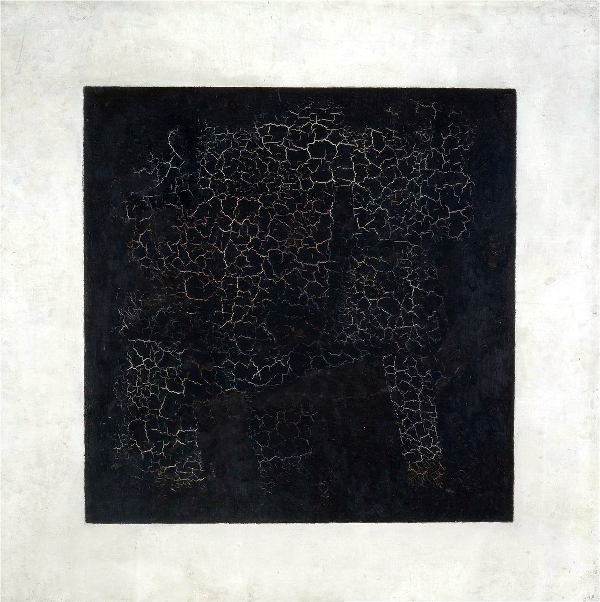
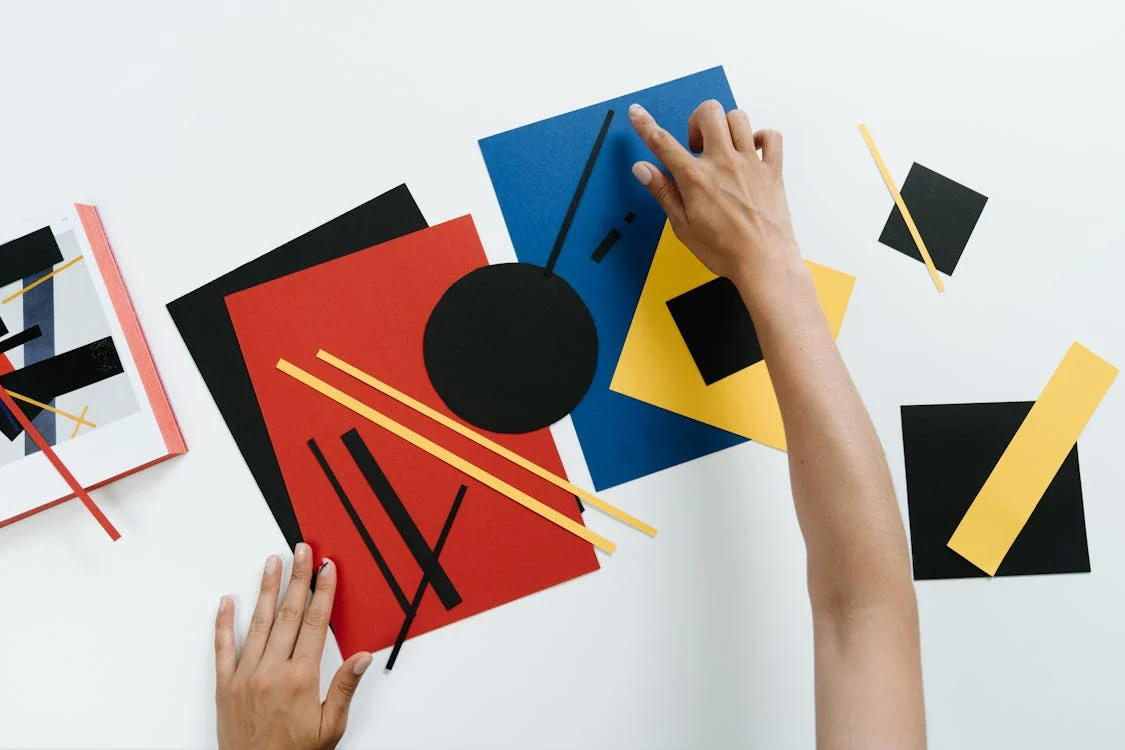
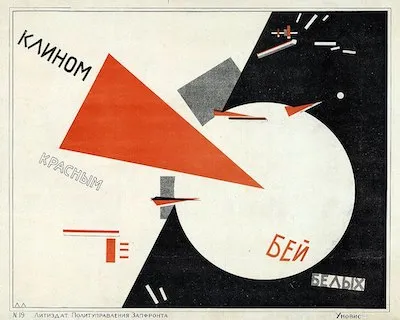
Why a Black Square Changed the Course of Art History In 1915, Kazimir Malevich exhibited a black square on a white canvas and declared: “I have transformed myself in the zero of form.” It was more than provocation — it was the birth of Suprematism, a movement that shattered centuries of representational art and set the stage for abstraction as we know it. What Is Suprematism? Suprematism is not just an aesthetic; it’s a philosophy. Malevich sought to liberate art from the burden of objects, representation, and narrative. His compositions — often made of geometric forms in pure color — were visual meditations on feeling, not function. Why It Mattered…
Wassily Kandinsky – Who was he?
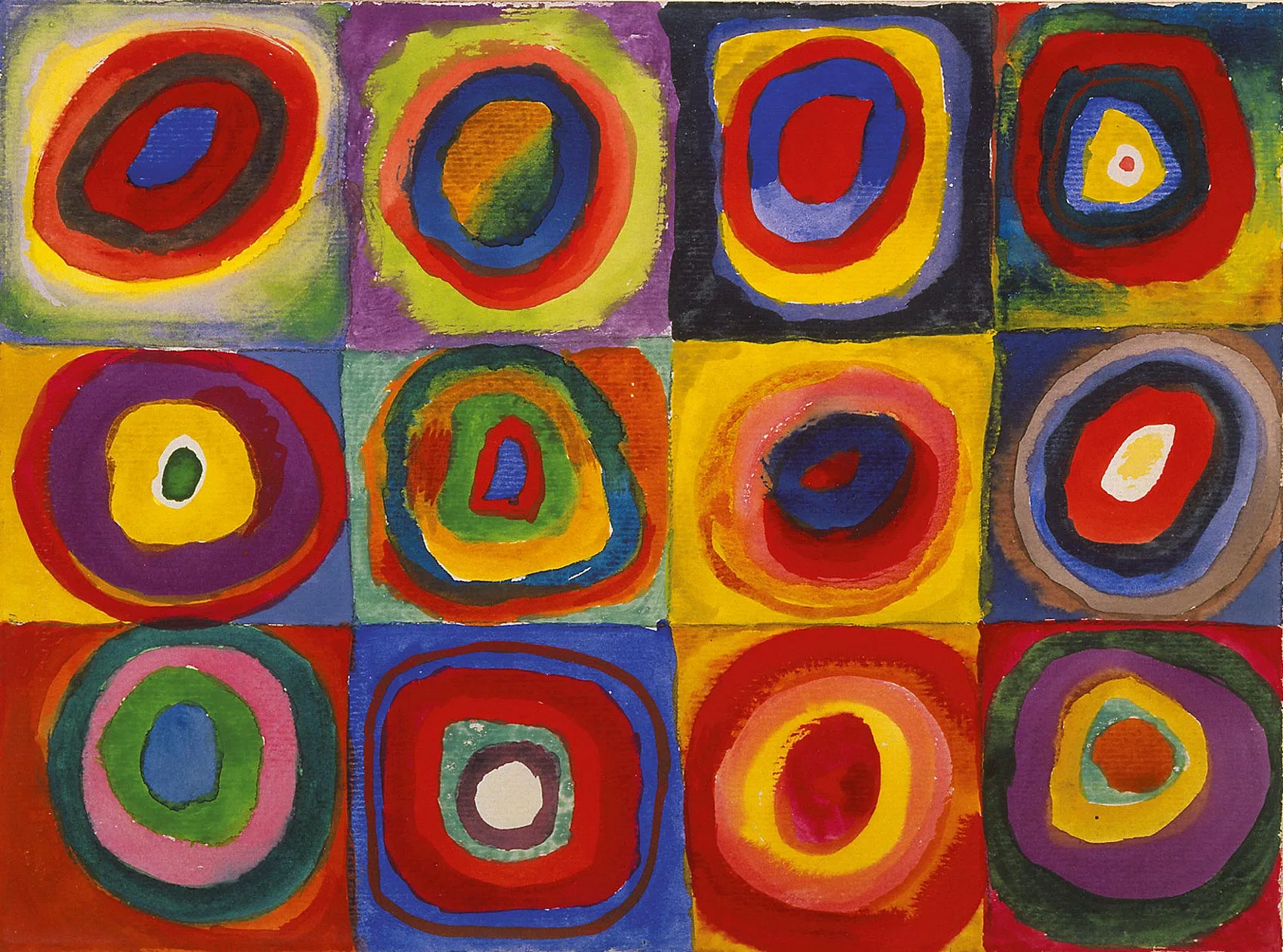
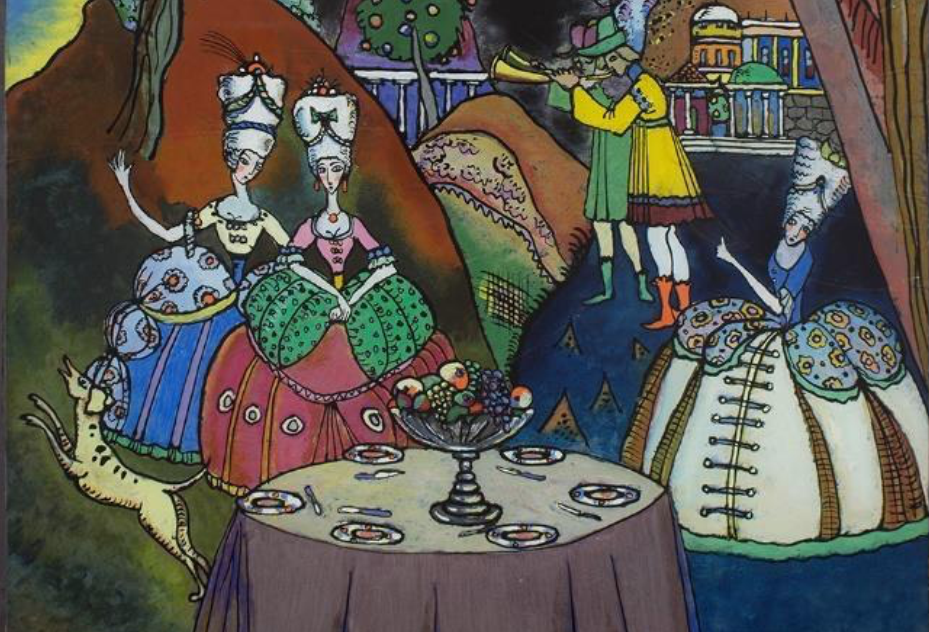
Wassily Kandinsky, a trailblazer in the realm of abstract modern art, crafted paintings that intricately explored the interaction between color and form to evoke emotional responses and captivate audiences. He advocated for complete abstraction as a powerful vehicle for profound expression, steering away from direct depictions of the natural world. Kandinsky’s artistic progression unfolded through three distinct phases, moving from representational works to exuberant compositions and eventually to the creation of geometric and biomorphic flat surfaces adorned with vivid hues. Born in Moscow in 1866, Kandinsky’s formative years were enriched by exposure to diverse cultural influences, which significantly shaped his artistic perspective. His fascination with color and form was deeply…
Ivan Klyun (Kliun) – Who was he?
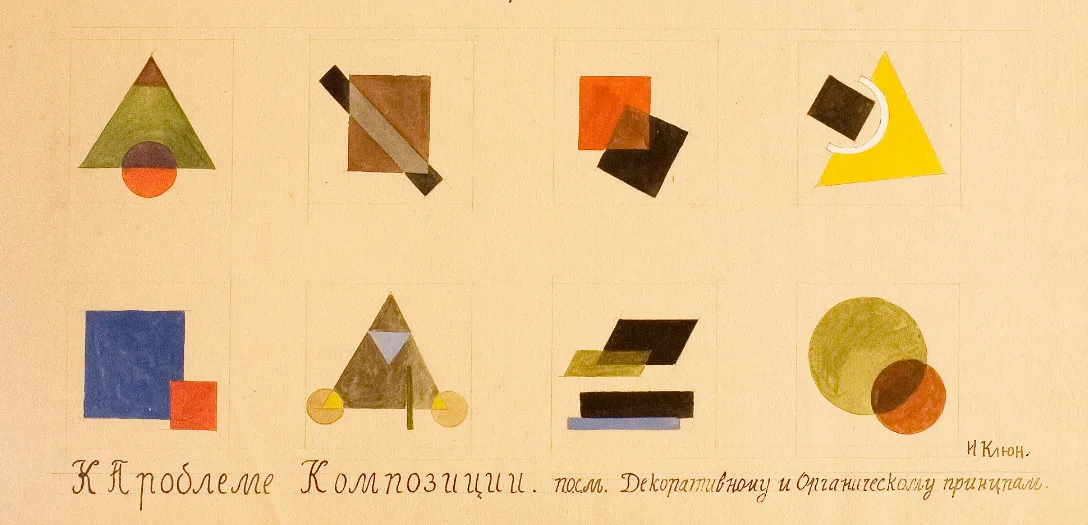
Imagine a bookkeeper with a secret passion – painting. That was Ivan Klyun (Ivan Vasilyevich Klyun – Klyunkov) , a talented Russian artist who wasn’t born with a silver spoon, but with a paintbrush in his soul. He honed his skills while balancing numbers, later studying with big names like Fyodor Rerberg. Klyun dabbled in different styles, from early influences like symbolism and Art Nouveau to the more geometric Cubism. But it was Suprematism, the movement that broke the mold with bold shapes and colors, that truly captured his imagination. He even joined forces with the movement’s founder, Kazimir Malevich, becoming a key player in the Suprematist world. Klyun’s journey…
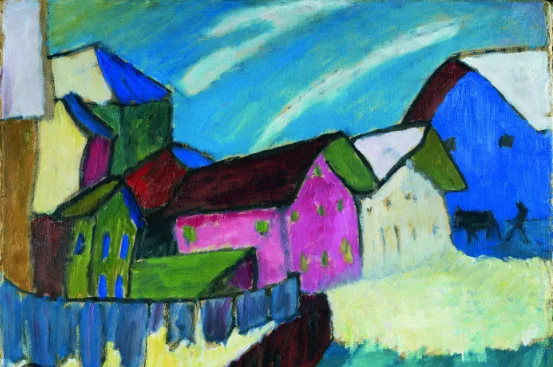
Wassily Kandinsky and Gabrielle Münter
Wassily Kandinsky and Gabriele Münter’s love story is a captivating tale of art, passion, and creativity. Kandinsky, renowned as the father of abstractionism, found a kindred spirit in Münter, a talented German artist. Despite Kandinsky’s official marriages, his bond with Münter blossomed into a 12-year companionship marked by mutual artistic inspiration and deep affection. Münter’s artistic talent flourished alongside Kandinsky’s groundbreaking abstract art, with both artists influencing each other’s work. Their travels to various countries enriched their creative perspectives, fostering a period of artistic innovation and growth. Münter’s unique style, characterized by clear lines and simple structures, complemented Kandinsky’s evolving approach towards abstraction. Their journey together was not without challenges.…
Kazimir Malevich “Two Peasants” 1929-1930
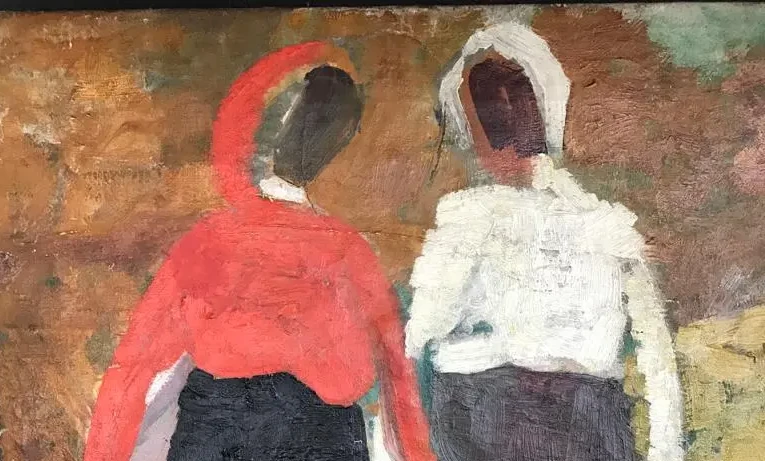
Kazimir Malevich’s “Two Peasants” is a significant piece from his later period, showcasing his exploration of form and color within his distinctive style of Suprematism. Painted in 1929-1930, it reflects Malevich’s continued interest in geometric abstraction and the reduction of forms to their essential components. In “Two Peasants,” Malevich presents two figures in a simplified, almost schematic manner. The figures are reduced to basic shapes and lines, emphasizing the geometric nature of his Suprematist style. The colors used are typically muted and limited, with emphasis on black, white, and shades of gray, enhancing the starkness of the composition. Malevich’s motivations for painting such works during this period were likely multifaceted.…
The two peasant women – Kazimir Malevich
The first owner of this painting was avant-garde artist Alexei Gan, a co-founder of the First Working Group of Constructivists with Alexander Rodchenko and Varvara Stepanova. Gan edited Kino-fot (1922–23) and co-edited Contemporary Architecture (1928), where Malevich also published articles. His partner, Esfir Shub, was a noted documentary filmmaker. Two Peasant Women belongs to Malevich’s second peasant cycle of the late 1920s. This intense painting synthesizes Malevich’s avant-garde activities, drawing from his first peasant cycle of the early 1910s. The imagery aligns with Russian icon painting, with the two women’s postures echoing saints in Orthodox Deësis. Their golden-hued background resembles traditional icon backdrops, with a two-toned pozem effect. The scarves…
Principles of Kazimir Malevich’s Suprematism Philosophy
Suprematist art, specially drawn in out-of-proportion size with the art concept, was a small standing mirror in which the materialistic men of a materialistic century could look at themselves…Suprematism presented to the Russian people the greatest aspects of non-objectivity in art and by so doing, open the way to a deeper understanding of art. Malevich was an intelligent in his stratagems for appealing to the plain sense of his utilitarian countrymen while not compromising his art doctrine. Step by step throughout its development, he would present the squares and circles as inventions to aid the peasant in life and in the end, it would seem seekers for eternal life. It…
Russian Avant-Garde
Exploring the Russian Avant-Garde: A Revolution in Art and Culture The Russian Avant-Garde was a groundbreaking movement that emerged in the early 20th century, roughly between 1890 and 1930. It encompassed a diverse array of artistic expressions, including painting, sculpture, literature, theater, and architecture. This vibrant period was marked by radical experimentation and a desire to break away from traditional forms, reflecting the turbulent social and political changes in Russia at the time. Origins and InfluencesThe movement drew inspiration from various sources, including Cubism, Futurism, and Expressionism in Western Europe. Russian artists sought to create a new visual language that would resonate with the revolutionary spirit sweeping across the country.…
Unveiling the Transcendent Beauty: Malevich and the Russian Avant-Garde
Unveiling the Transcendent Beauty Introduction:Entering the realm of Kazimir Malevich and the Russian Avant-Garde is akin to embarking on a spiritual odyssey of artistic revelation. As an impassioned collector deeply enamored by Malevich’s oeuvre, one finds oneself irresistibly drawn to the ineffable allure and profound philosophical depths that characterize each stroke of his brush. In this essay, the narrative unfolds from the perspective of an ardent collector, eager to convey the enrapturing essence of Malevich’s graphic works, offering glimpses into the transcendent beauty that continues to captivate collectors and aficionados worldwide. The Russian Avant-Garde Movement:For those enthralled by the enigmatic allure of Malevich’s creations, the Russian Avant-Garde movement stands as…