Shattered Canvases: The Brutal Divorce of Russian & Ukrainian Art
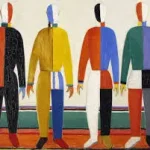
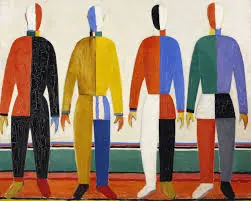
For decades, the art worlds of Moscow and Kyiv operated like estranged siblings who shared an apartment building but kept separate keys. They went to the same academies, studied the same avant-garde giants, and shared an uneasy geographical intimacy that dates back centuries through Soviet and imperial eras. Kazimir Malevich—born in Kyiv to Polish parents, but globally canonized as a titan of the Russian avant-garde—is the perfect symbol of this historical blur. For a long time, the Western art market didn’t care enough to untangle the knots. Anything coming out of the post-Soviet space was lazily swept into a single, lucrative bucket labeled “Russian culture.”
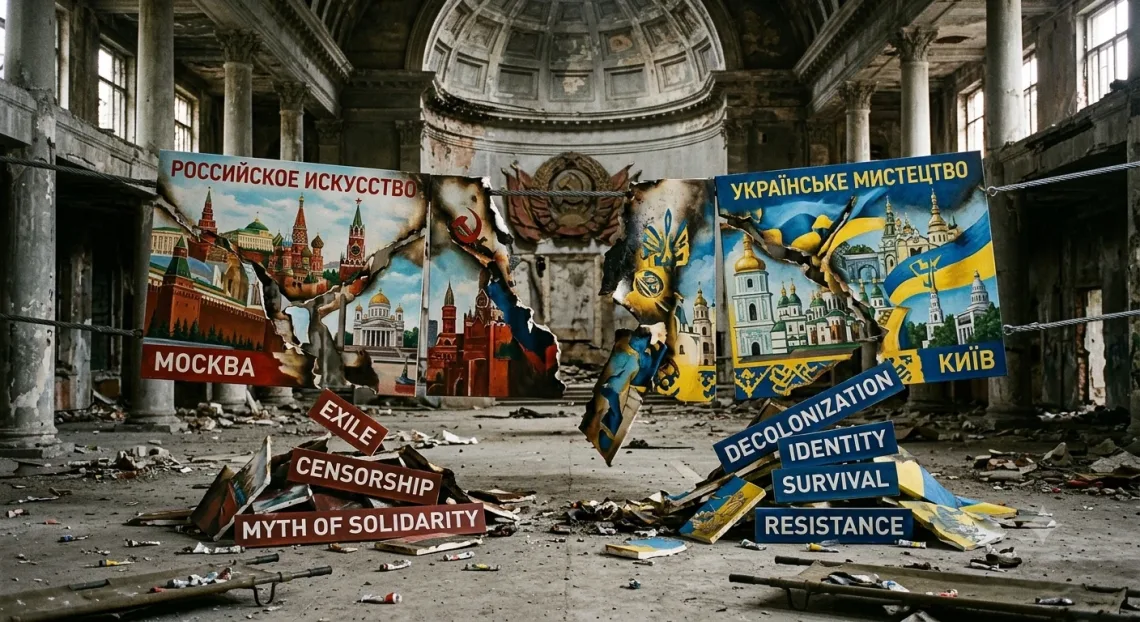
Then came February 2022, and that entire shared architectural history was hit by a wrecking ball. The canvas didn’t just rip; it shattered entirely.
The Architectural Rupture
The immediate result was a cultural divorce so absolute that it makes traditional geopolitical sanctions look soft. Over the past few years, the international art community has executed a massive pivot, cutting off state-backed Russian museums and oligarch funding like a bad habit. Yet, the real rupture isn’t happening in the boardrooms of Sotheby’s or the galleries of London; it is happening in the trenches of creative identity.
Ukrainian artists have spent the last few years engaged in an intense, urgent campaign of cultural decolonization. They are reclaiming their stolen history, insisting that the world recognize the distinct Ukrainian roots of artists long mislabeled as Russian. For these creators, art has ceased to be a luxury or an intellectual exercise; it has become an act of documentation and survival. While some have traded brushes for rifles, others are using their canvases to archive the trauma of air raids and destroyed heritage. It is a grueling, exhausting form of art-as-resistance, driven by the knowledge that Russia’s invasion seeks to erase not just territory, but the very concept of Ukrainian culture.
Exile, Silence, and the Myth of Solidarity
Meanwhile, the Russian art scene has fractured into a grim binary of state-approved propaganda and frantic exile. The artists who stayed and refused to parrot the Kremlin’s line have been systematically silenced by censorship and the threat of prison. Tens of thousands of creatives fled across borders, landing in makeshift cultural hubs from Tbilisi to Berlin.
Here lies one of the most complicated, uncomfortable realities of the current landscape. In the sanctuaries of Western Europe, exiled Russian dissidents and displaced Ukrainian refugees frequently cross paths. On paper, they share an enemy: Vladimir Putin. But an experienced analyst looks at this forced proximity with healthy skepticism.
True reconciliation cannot be manufactured in a Parisian residency or an international panel discussion. For many Ukrainian artists, a shared anti-war stance is not enough to erase centuries of imperial entitlement. They argue that even the most progressive Russian intellectuals often carry a subtle, unconscious bias that views Ukrainian culture as a subordinate, regional offshoot rather than an equal.
A Map of Total Separation
The war has permanently shattered the illusion of a unified post-Soviet art world. The relationship is no longer one of overlapping circles, but of parallel lines moving in radically different directions. Ukraine is fighting to establish an unshakeable, independent cultural sovereignty that the West can no longer ignore, while Russian art is left to grapple with the stain of complicity and the disjointed reality of a diaspora. The paint has dried on the old era; what is being sketched now is a map of total separation.